
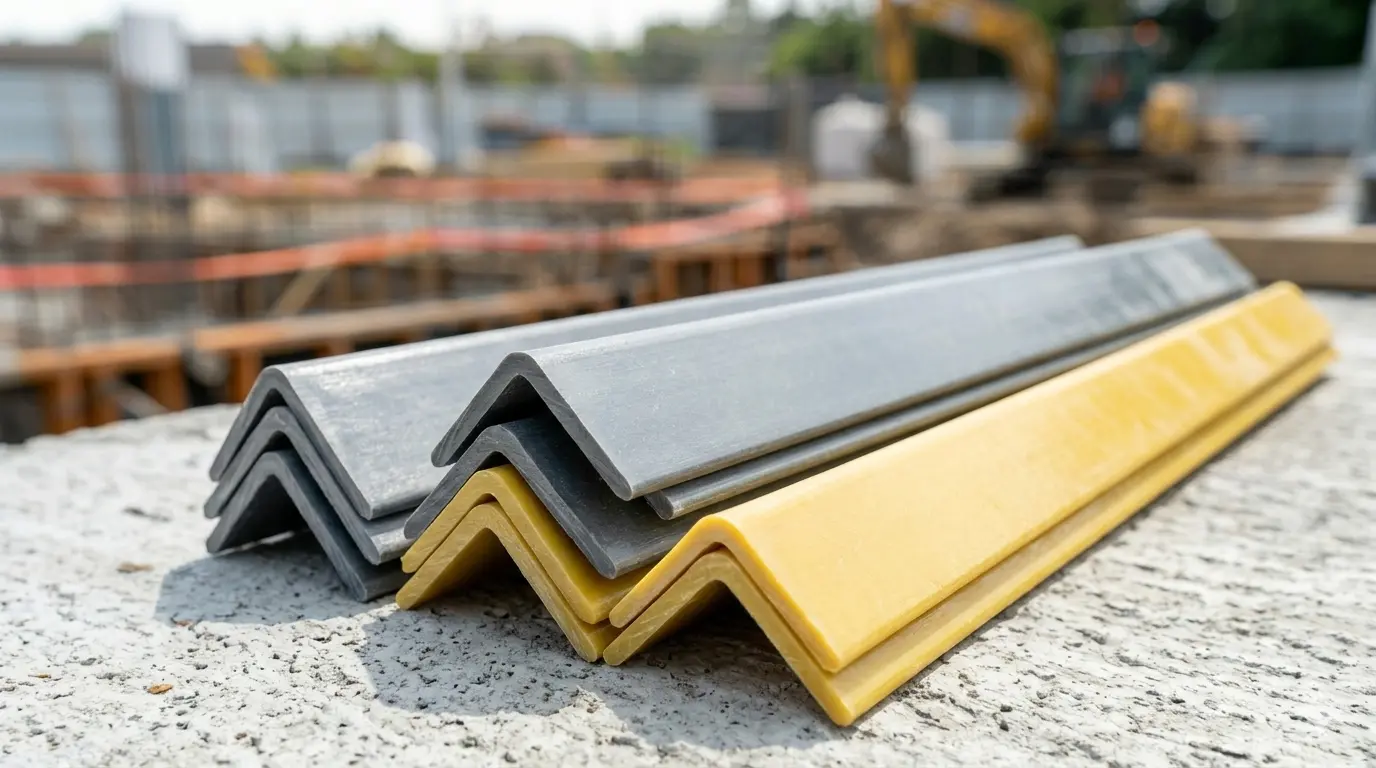
FRP Rebar vs Steel Rebar: A Complete Comparison
When choosing reinforcement bars for a construction project, two primary options dominate the market: traditional steel rebar and modern FRP (Fiber Reinforced Polymer) rebar. Understanding the differences between FRP rebar vs steel rebar is critical for engineers, contractors, and project managers who want to maximize durability while controlling long-term costs.
In this guide, we break down both materials across key performance categories — strength, corrosion resistance, weight, cost, and application suitability — so you can make an informed decision for your next infrastructure project.
What is FRP Rebar?
FRP rebar, or Fiber Reinforced Polymer rebar, is a composite reinforcement bar made from high-strength fiberglass fibers embedded in a polymer resin matrix. The result is a lightweight, non-corrosive bar that offers exceptional tensile strength and long-term durability — making it a popular alternative to steel reinforcement in demanding environments.
FRP rebars are available in various diameters and are used in concrete structures where corrosion resistance, electromagnetic neutrality, or reduced weight are priorities. Learn more about our FRP Construction Bars to find the right specification for your project.
FRP Rebar vs Steel Rebar: Key Differences
1. Corrosion Resistance
This is the single most significant advantage FRP rebar holds over steel. Steel reinforcement corrodes when exposed to moisture, chloride ions, and oxygen — a process that causes concrete to crack and spall over time. In coastal areas, marine structures, and de-iced highways, steel rebar corrosion is responsible for billions in repair costs annually.
FRP rebars are completely rust-proof. They do not react with chloride, sulfate, or moisture, which means concrete structures reinforced with FRP can last significantly longer with minimal maintenance. For a deeper look, read our guide on the top benefits of FRP rebar.
2. Tensile Strength
FRP rebar has a higher tensile strength-to-weight ratio than steel. While standard steel rebar has a tensile strength of approximately 500 MPa, fiberglass FRP rebar can exceed 1000 MPa in tensile capacity. However, it is important to note that FRP rebar is anisotropic — its strength is primarily axial (along the bar), and it does not bend or yield like steel.
3. Weight and Handling
FRP rebar is approximately 75–80% lighter than steel rebar of the same diameter. This dramatically reduces transportation costs, labor hours during installation, and the physical load on structures. Workers can handle longer bar lengths with less fatigue, and no heavy lifting equipment is required for most installations.
4. Thermal and Electrical Properties
Unlike steel, FRP rebar is non-conductive and non-magnetic. This makes it the preferred reinforcement for MRI rooms, electrical substations, railway platforms, and other structures where electromagnetic interference is a concern.
5. Cost Comparison
The upfront material cost of FRP rebar is generally higher than steel rebar. However, when total lifecycle costs are evaluated — including corrosion-related repairs, maintenance, and structural replacement — FRP rebar typically delivers a lower cost over the life of the structure. Projects in aggressive environments often recoup the price difference within the first decade.
When to Use FRP Rebar vs Steel Rebar
Choose FRP rebar when your project involves marine or coastal environments, de-iced roads and bridges, chemical plants, water treatment facilities, or any structure requiring long service life with minimal maintenance. Steel rebar remains a practical choice for standard residential and commercial construction where corrosion exposure is low and lifecycle cost analysis favors the lower initial investment.
For detailed use cases, explore our article on FRP rebar applications in modern infrastructure.
Summary Table: FRP Rebar vs Steel Rebar
| Property | FRP Rebar | Steel Rebar |
|---|---|---|
| Corrosion Resistance | Excellent — rust-proof | Poor — corrodes in moisture |
| Tensile Strength | Up to 1000+ MPa | ~500 MPa |
| Weight | 75–80% lighter | Heavy |
| Conductivity | Non-conductive | Conductive |
| Upfront Cost | Higher | Lower |
| Lifecycle Cost | Lower | Higher in harsh environments |
Conclusion
The FRP rebar vs steel rebar debate comes down to project environment and lifecycle priorities. For infrastructure projects exposed to corrosive conditions, FRP rebar is the superior long-term investment. For standard construction with limited corrosion exposure, steel remains a cost-effective option. Understanding your project's specific demands will guide the right choice.
Ready to explore FRP reinforcement options? Browse our full range of FRP Construction Bars.
Frequently Asked Questions
Quick answers related to this article.

