
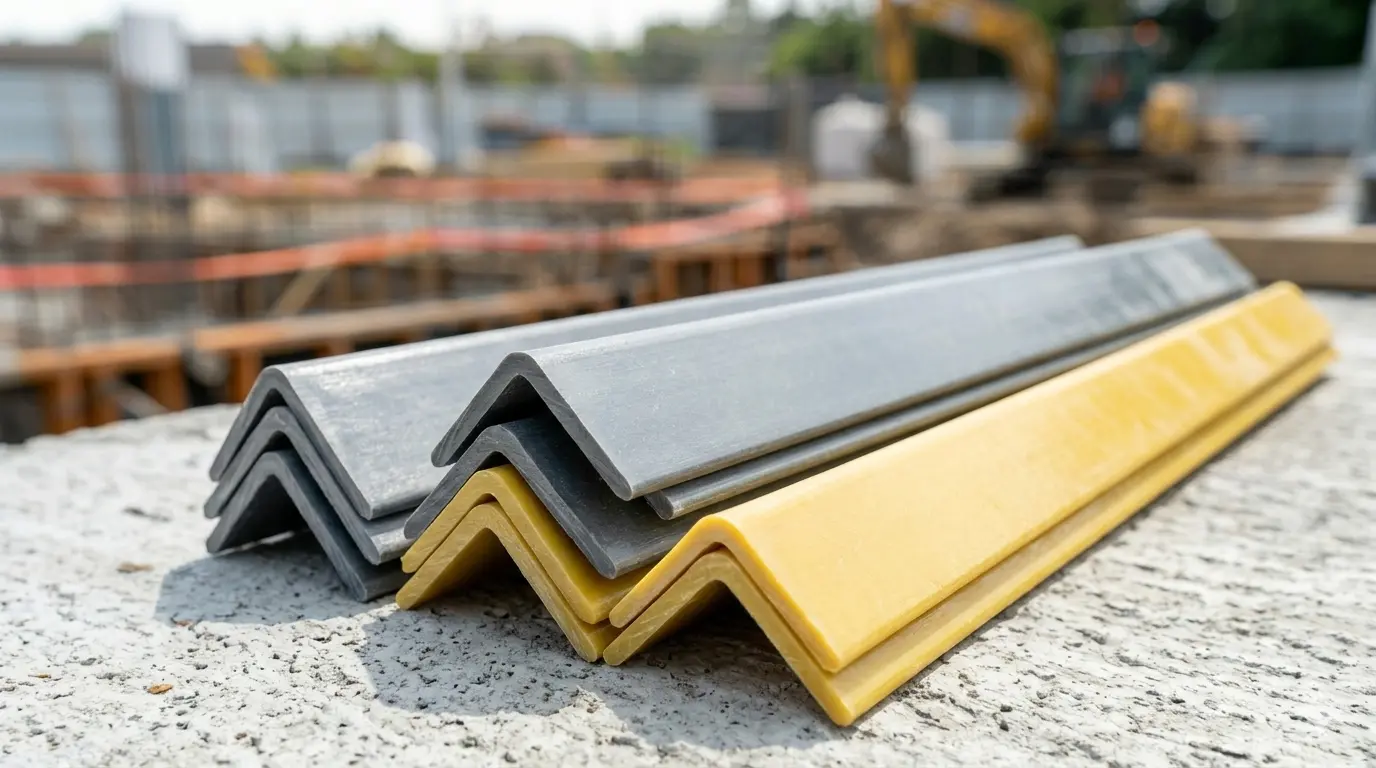
What is FRP Rebar?
FRP rebar stands for Fiber Reinforced Polymer reinforcement bar — a high-performance composite material used to reinforce concrete structures. Unlike conventional steel rebar, FRP rebar is manufactured from continuous fiberglass fibers embedded within a thermosetting polymer resin, producing a bar that is simultaneously lightweight, extremely strong, and completely corrosion-resistant.
The global construction industry is rapidly adopting FRP reinforcement technology as a long-term solution to the widespread problem of steel corrosion in concrete infrastructure. Understanding what FRP rebar is and how it works is the first step for any engineer or contractor considering modern reinforcement options.
How is FRP Rebar Made?
FRP rebar is produced through a manufacturing process called pultrusion. In this process, continuous fiberglass rovings are pulled through a resin bath to saturate the fibers, and then drawn through a heated steel die. The die shapes and cures the resin around the fibers under controlled heat and tension, producing a solid, dimensionally consistent bar with a textured or helical outer surface for improved bonding with concrete.
The fiber content, resin type, and surface treatment can be adjusted during manufacturing to tailor the rebar's mechanical properties for specific applications. This is one reason FRP rebar is available in several grades optimized for tensile load, chemical resistance, or thermal performance.
Main Properties of FRP Rebar
Corrosion Resistance
FRP rebar does not rust. The polymer matrix that encases the fiberglass fibers is impervious to chloride ions, moisture, and the alkaline environment inside concrete. This makes FRP the ideal reinforcement material for structures in marine zones, chemical plants, and de-iced road infrastructure where steel corrosion is a chronic and costly problem.
High Tensile Strength
FRP rebar offers tensile strength values that exceed those of conventional steel rebar — typically between 700 MPa and 1200 MPa depending on fiber volume and resin type. This high strength-to-weight ratio means fewer or smaller bars may be required to achieve equivalent reinforcement performance in many applications.
Lightweight Construction Material
FRP rebar weighs approximately 25% of equivalent-diameter steel rebar. This significant weight reduction simplifies handling, reduces transportation costs, and lowers labor requirements on site. Long bar lengths that would require cranes or heavy equipment with steel can be easily managed by hand with FRP.
Non-Conductive and Non-Magnetic
Because FRP rebar contains no metal, it is electrically non-conductive and magnetically transparent. This makes it the material of choice for reinforcing MRI suites, radar installations, toll plazas, and electrical infrastructure where steel reinforcement would interfere with equipment operation.
Chemical Resistance
FRP rebar maintains structural integrity when exposed to acids, alkalis, and aggressive chemicals that would rapidly degrade steel reinforcement. It is widely used in industrial flooring, wastewater treatment facilities, and chemical processing plants for this reason.
FRP Rebar vs Steel Rebar: Quick Overview
The primary advantage of FRP rebar over steel is its immunity to corrosion, which is the leading cause of concrete infrastructure deterioration worldwide. While steel rebar remains cost-effective for standard construction, FRP rebar delivers lower lifecycle costs in aggressive environments by eliminating corrosion-driven repair cycles. For a full breakdown, see our detailed FRP rebar vs steel rebar comparison.
Types of FRP Rebar
The most commonly used type is GFRP (Glass Fiber Reinforced Polymer) rebar, which offers an excellent balance of performance and cost. CFRP (Carbon Fiber Reinforced Polymer) rebar provides even higher stiffness and strength but at a greater material cost, making it suitable for specialized structural applications. BFRP (Basalt Fiber Reinforced Polymer) is an emerging alternative offering good chemical resistance at a competitive price point.
Where is FRP Rebar Used?
FRP reinforcement bars are specified in a wide range of infrastructure applications. Common uses include bridge decks, seawalls and marine jetties, highway tunnels, parking structure slabs, airport pavements, and precast concrete panels. For a comprehensive list of project types, read our article on FRP rebar applications in modern infrastructure.
Conclusion
FRP rebar is a proven, high-performance alternative to steel reinforcement that solves the corrosion problem that affects concrete infrastructure globally. Its combination of high tensile strength, light weight, non-conductivity, and chemical resistance makes it the optimal choice for a growing range of construction applications. As standards and awareness continue to develop, FRP reinforcement is set to become an increasingly standard material across the global construction industry.
Explore our complete range of FRP Construction Bars to find the right product for your project.
Frequently Asked Questions
Quick answers related to this article.

